
My Advice on Writing Advice (Rob's Meta-Advice)
When I began my writing journey, I decided to explore all sorts of writing resources. Fortunately, there was no shortage of resources.
It turns out there are lots of books on the writing craft. I figured that if I read enough of them, I’d be able to write well.
I also came across a lot of YouTube videos that covered different aspects of the craft of writing.
And blogs.
And podcasts.
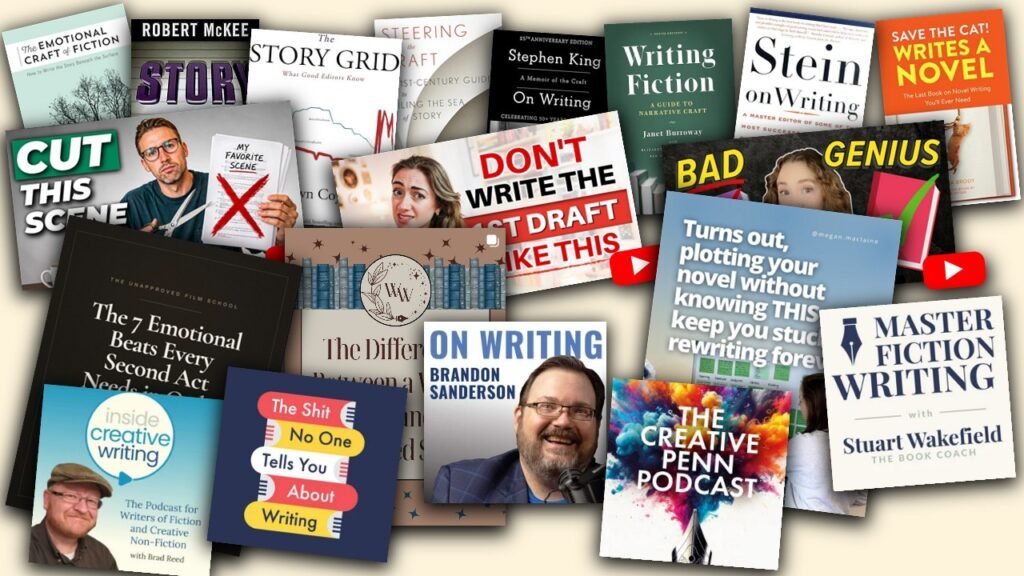
It’s overwhelming.
What’s worse is that many of these resources contradicted each other. For example:
write every day to build up a discipline and routine
vs.
write every day to build up a discipline and routine
write immersive descriptions that transport your reader to the setting
vs.
write a minimal setting to allow your reader to fill in the gaps with your imagination
So, which is correct?
My conclusion (which was hard to admit) is that there is no single set of rules for writing.
And yet, there are so many tools and techniques, what am I supposed to do with them?
Here’s what works for me (your mileage my vary).
First, Ignore the advice.
Imagine you’re in the middle of writing a story and you’re about to start a new scene. You try try recall that scenes shouldn’t start too early, the first sentence should hook the reader’s interest, you need to establish the setting and the point of view character early so the reader isn’t lost. The character’s goal should appear early in the scene.
Yikes!
There’s so much advice to keep in mind when writing the first draft, that it becomes an obstacle to getting your story out. A single sentence can take hours to perfect.
In my opinion, most writing advice is best served as re-writing advice. Get your first draft out so you can focus on the story. Give yourself permission to make it messy. But get it out.
Rewrite & Experiment
Once the first draft is complete, then it’s time to edit and focus on quality (by incorporating the writing advice).
But there’s so much writing advice, which should I follow?
There’s no right answer here, so I suggest you experiment. Try different things. Some tips and techniques might resonate well with you. Some advice might make you cringe, but try it anyway. The only way we learn is by moving outside our comfort zone.
Regardless of how the experiment turns out, you’ll learn something about yourself in the process. You might realize you enjoy discovering your story as you go. You might realize that starting at the end of your story and working backwards works better.
The more we learn (whether about the process, the craft, or ourselves), the better writers we become.